

Table of Contents
-
- 🌊 Do not dive headfirst into water if the depth is unknown
- 🏊 Do not swim alone or overestimate yourself
- 🏢 Do not climb on balconies, railings, roofs, or window ledges
- 🚗 Never ride without a seatbelt
- 📱 No distractions in traffic
- 🚙 Do not ride with intoxicated or reckless drivers
- 🚴 Always wear a helmet when biking, skateboarding, or riding a scooter
- 🎆 Do not play with fireworks, gasoline, or dangerous experiments
- ☀️ Do not stay unprotected in extreme heat for hours
- 🚫 Never leave anyone in the car
- 📸 Do not copy dangerous stunts for social media
- 🌙 Basic rule: Avoid situations where one mistake changes everything
1
🌊 Do not dive headfirst into water if the depth is unknown
-
-
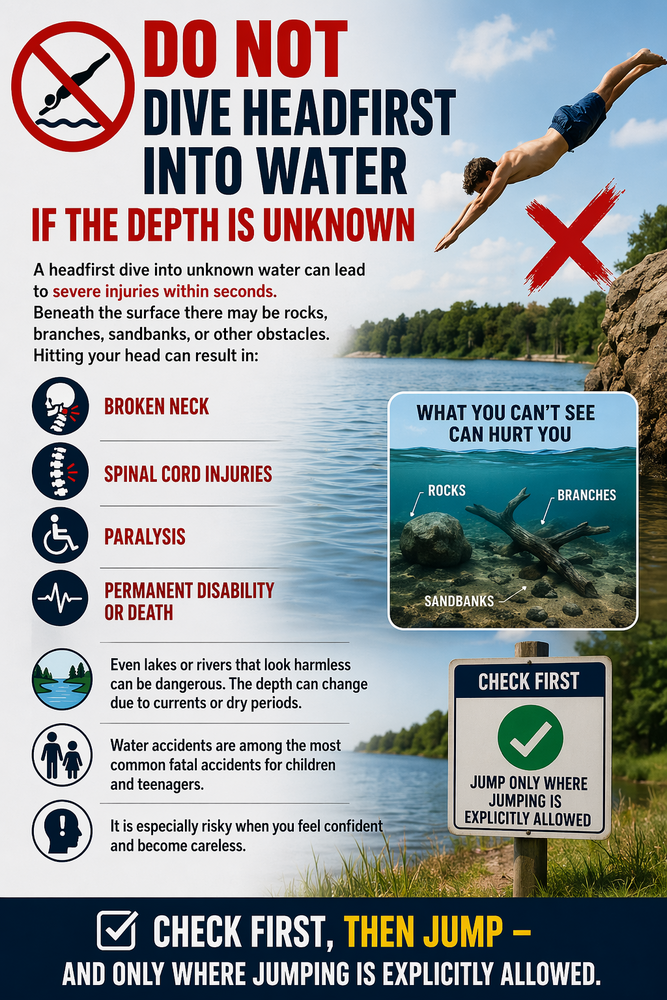
A headfirst dive into unknown water can lead to severe injuries within seconds. Beneath the surface there may be rocks, branches, sandbanks, or other obstacles. Hitting your head can result in:
-
- Broken neck
- Spinal cord injuries
- Paralysis
- Permanent disability or death
-
Even lakes or rivers that look harmless can be dangerous. The depth can change due to currents or dry periods. Water accidents are among the most common fatal accidents for children and teenagers. It is especially risky when you feel confident and become careless. Check first, then jump – and only where jumping is explicitly allowed.
-
⚙ a1
2
🏊 Do not swim alone or overestimate yourself
-
-
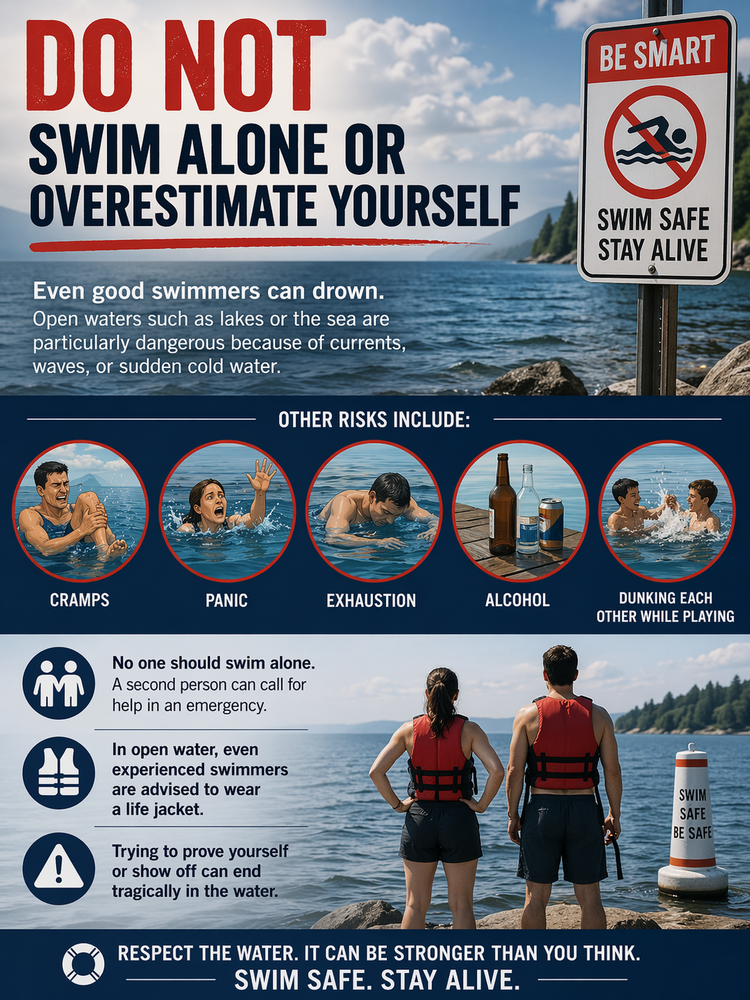
Even good swimmers can drown. Open waters such as lakes or the sea are particularly dangerous because of currents, waves, or sudden cold water. Other risks include:
-
- Cramps
- Panic
- Exhaustion
- Alcohol
- Dunking each other while playing
-
No one should swim alone. A second person can call for help in an emergency. In open water, even experienced swimmers are advised to wear a life jacket. Trying to prove yourself or show off can end tragically in the water.
-
⚙ a2
3
🏢 Do not climb on balconies, railings, roofs, or window ledges
-
-
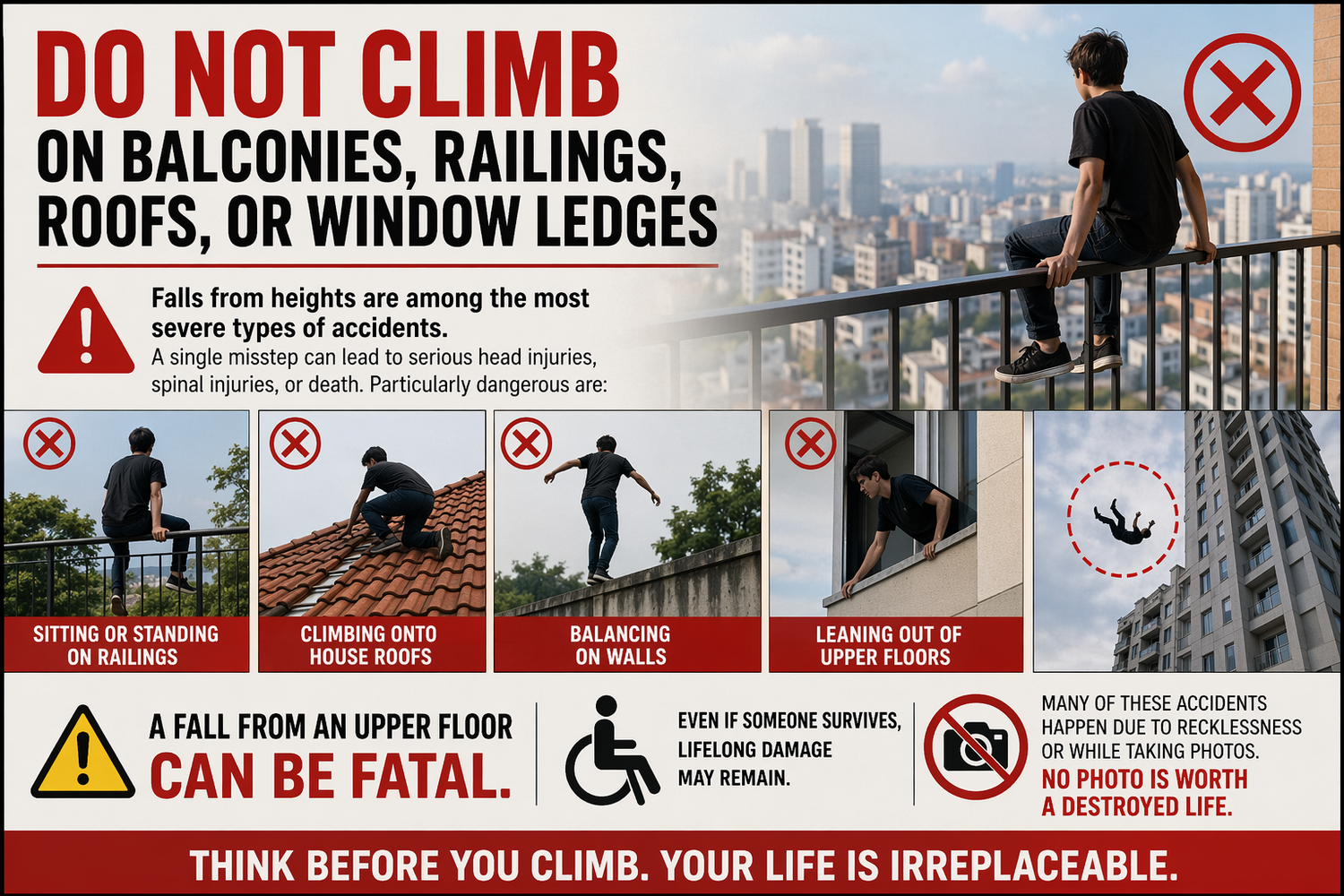
Falls from heights are among the most severe types of accidents. A single misstep can lead to serious head injuries, spinal injuries, or death. Particularly dangerous are:
-
- Sitting or standing on railings
- Climbing onto house roofs
- Balancing on walls
- Leaning out of upper floors
-
A fall from an upper floor can be fatal. Even if someone survives, lifelong damage may remain. Many of these accidents happen due to recklessness or while taking photos. No photo is worth a destroyed life.
-
⚙ a3
4
🚗 Never ride without a seatbelt
-
-
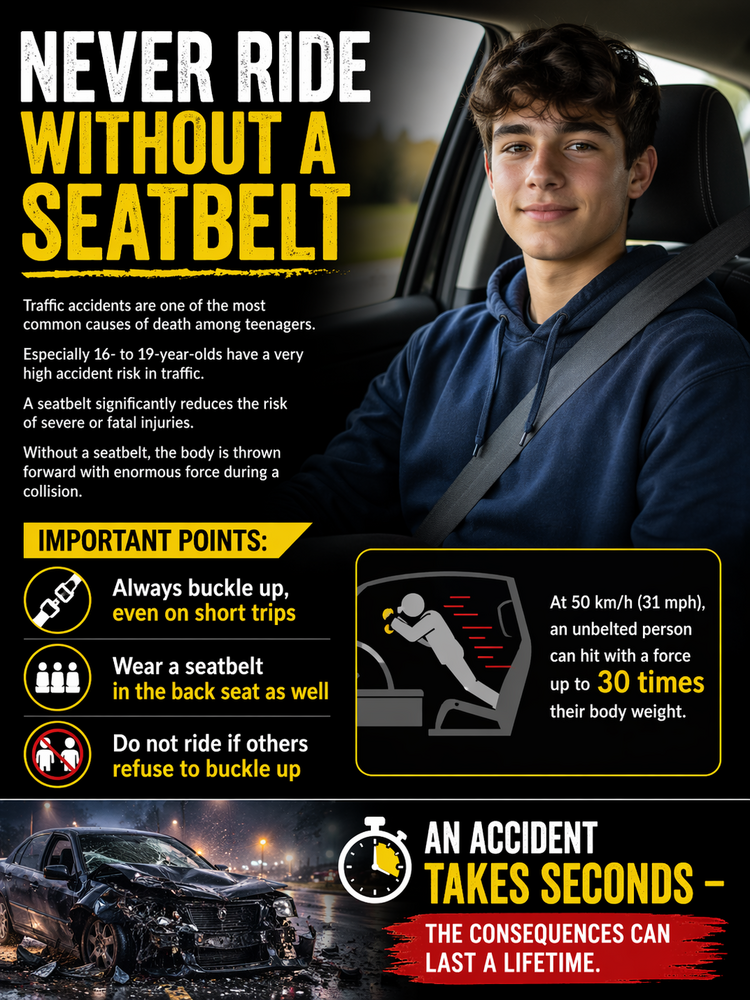
Traffic accidents are one of the most common causes of death among teenagers. Especially 16- to 19-year-olds have a very high accident risk in traffic. A seatbelt significantly reduces the risk of severe or fatal injuries. Without a seatbelt, the body is thrown forward with enormous force during a collision.
-
Important points:
-
- Always buckle up, even on short trips
- Wear a seatbelt in the back seat as well
- Do not ride if others refuse to buckle up
-
An accident takes seconds – the consequences can last a lifetime.
-
⚙ a4
5
📱 No distractions in traffic
-
-
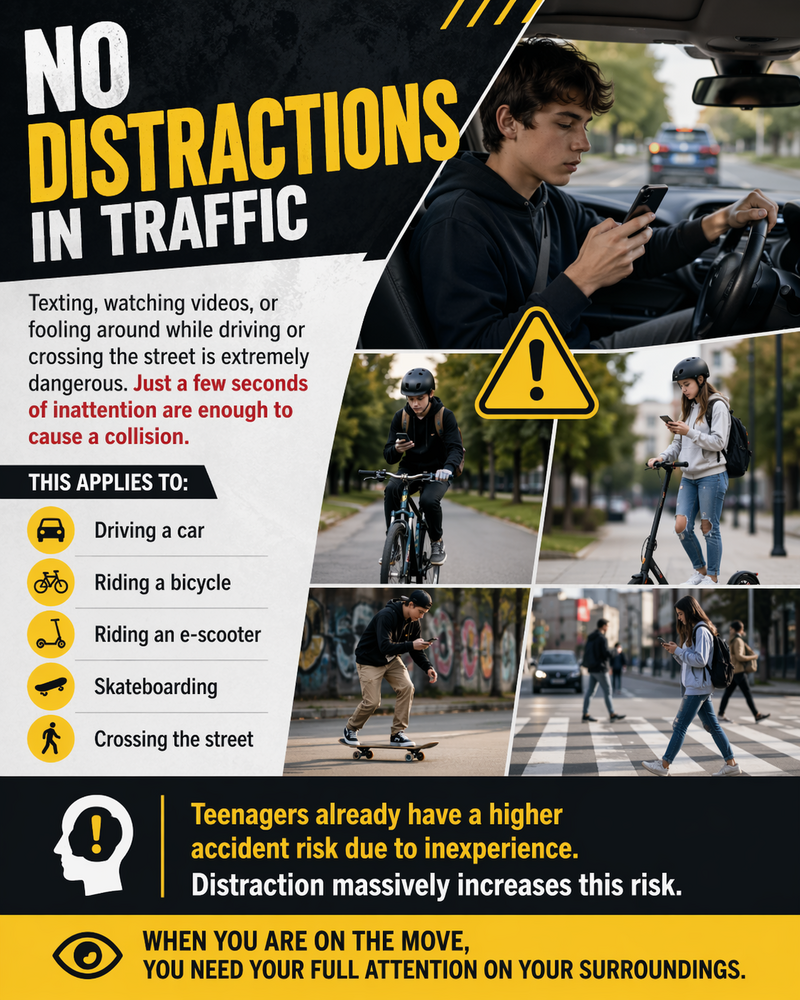
Texting, watching videos, or fooling around while driving or crossing the street is extremely dangerous. Just a few seconds of inattention are enough to cause a collision. This applies to:
-
- Driving a car
- Riding a bicycle
- Riding an e-scooter
- Skateboarding
- Crossing the street
-
Teenagers already have a higher accident risk due to inexperience. Distraction massively increases this risk. When you are on the move, you need your full attention on your surroundings.
-
⚙ a5
6
🚙 Do not ride with intoxicated or reckless drivers
-
-
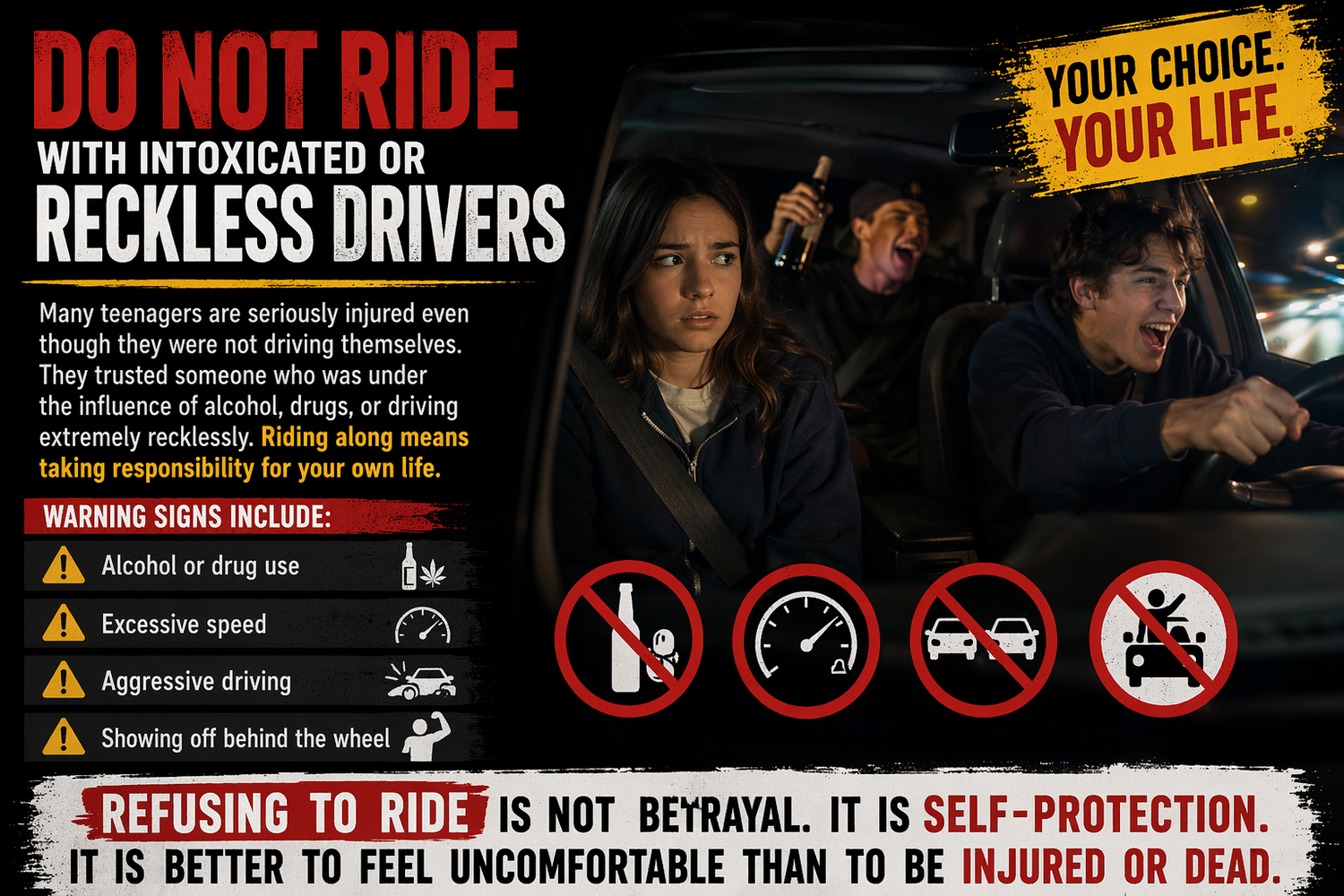
Many teenagers are seriously injured even though they were not driving themselves. They trusted someone who was under the influence of alcohol, drugs, or driving extremely recklessly. Riding along means taking responsibility for your own life.
-
Warning signs include:
-
- Alcohol or drug use
- Excessive speed
- Aggressive driving
- Showing off behind the wheel
-
Refusing to ride is not betrayal. It is self-protection. It is better to feel uncomfortable than to be injured or dead.
-
⚙ a6
7
🚴 Always wear a helmet when biking, skateboarding, or riding a scooter
-
-
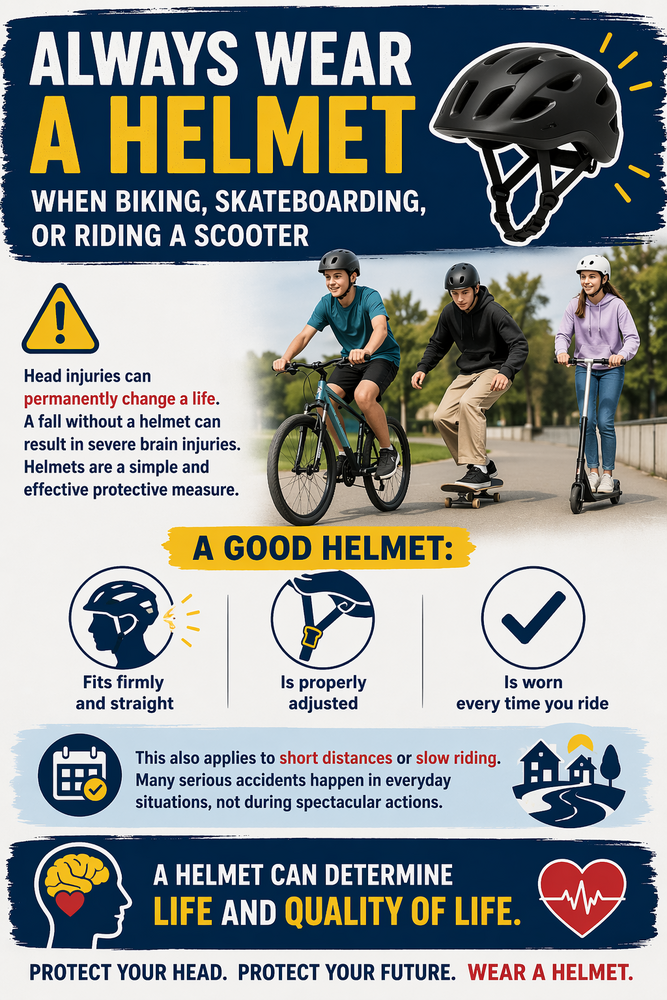
Head injuries can permanently change a life. A fall without a helmet can result in severe brain injuries. Helmets are a simple and effective protective measure.
-
A good helmet:
-
- Fits firmly and straight
- Is properly adjusted
- Is worn every time you ride
-
This also applies to short distances or slow riding. Many serious accidents happen in everyday situations, not during spectacular actions. A helmet can determine life and quality of life.
-
⚙ a7
8
🎆 Do not play with fireworks, gasoline, or dangerous experiments
-
-
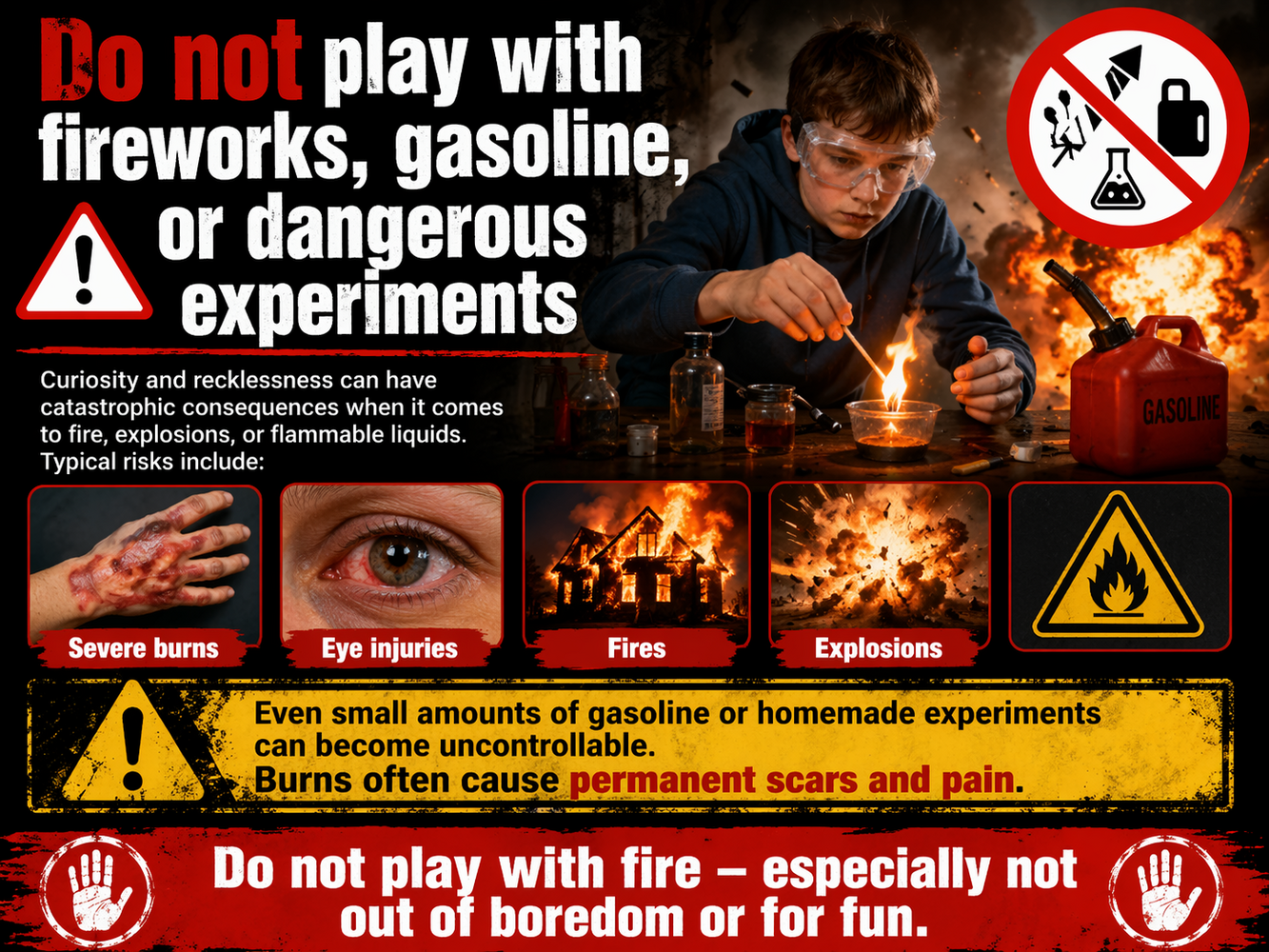
Curiosity and recklessness can have catastrophic consequences when it comes to fire, explosions, or flammable liquids. Typical risks include:
-
- Severe burns
- Eye injuries
- Fires
- Explosions
-
Even small amounts of gasoline or homemade experiments can become uncontrollable. Burns often cause permanent scars and pain. Do not play with fire – especially not out of boredom or for fun.
-
⚙ a8
9
☀️ Do not stay unprotected in extreme heat for hours
-
-
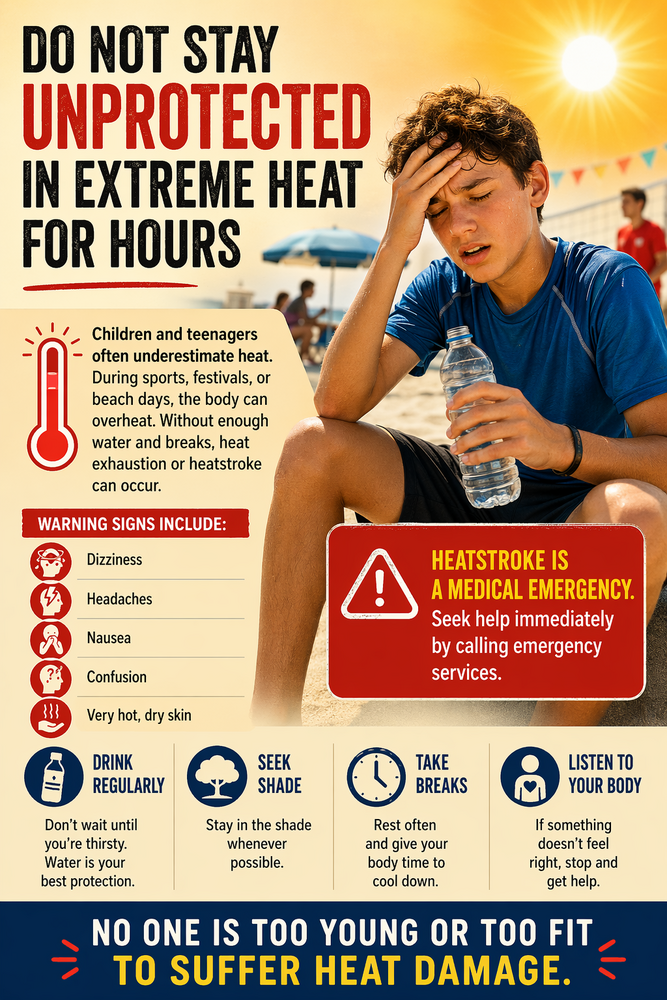
Children and teenagers often underestimate heat. During sports, festivals, or beach days, the body can overheat. Without enough water and breaks, heat exhaustion or heatstroke can occur.
-
Warning signs include:
-
- Dizziness
- Headaches
- Nausea
- Confusion
- Very hot, dry skin
-
Heatstroke is a medical emergency. Therefore drink regularly, seek shade, take breaks, and listen to your body. No one is too young or too fit to suffer heat damage.
-
⚙ a9
10
🚫 Never leave anyone in the car
-
-
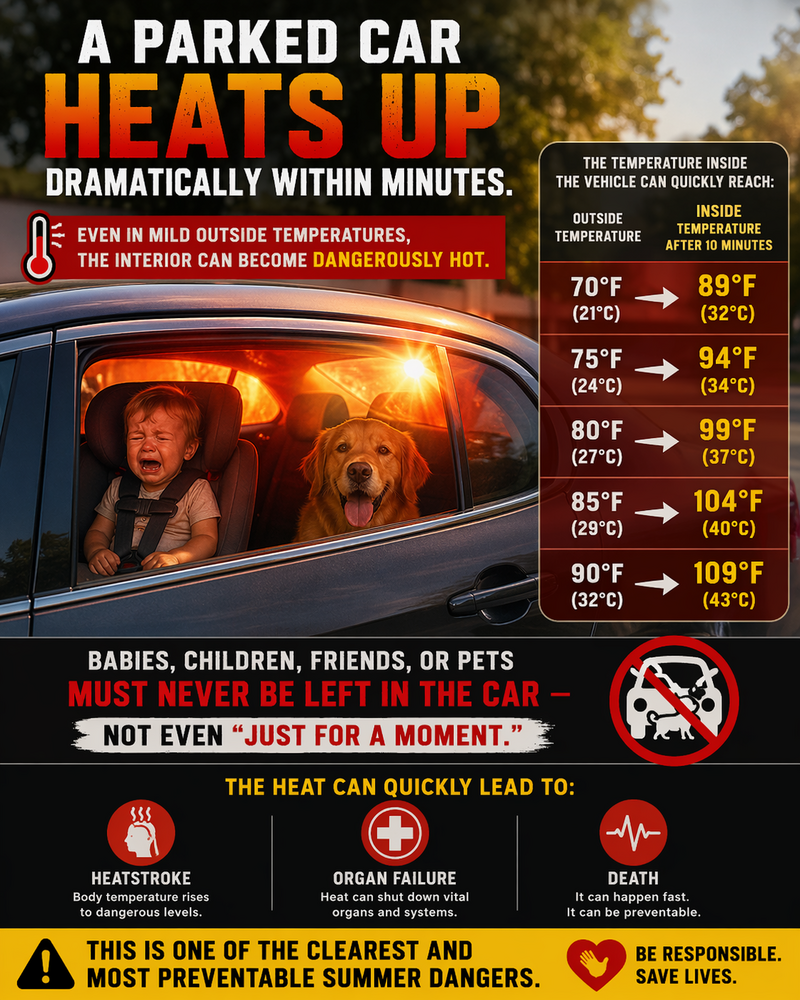
A parked car heats up dramatically within minutes. Even in mild outside temperatures, the interior can become dangerously hot. Babies, children, friends, or pets must never be left in the car – not even "just for a moment."
-
The temperature inside the vehicle can quickly reach levels that lead to:
-
- Heatstroke
- Organ failure
- Death
-
This is one of the clearest and most preventable summer dangers.
-
⚙ a10
11
📸 Do not copy dangerous stunts for social media
-
-
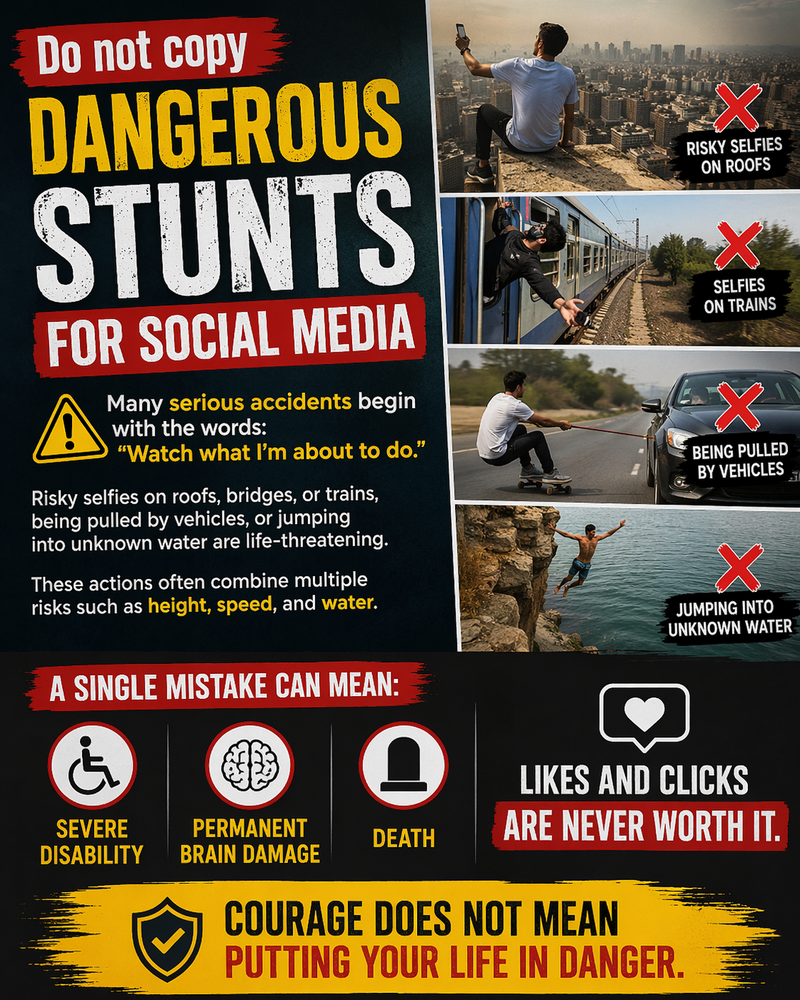
Many serious accidents begin with the words: "Watch what I’m about to do." Risky selfies on roofs, bridges, or trains, being pulled by vehicles, or jumping into unknown water are life-threatening. These actions often combine multiple risks such as height, speed, and water.
-
A single mistake can mean:
-
- Severe disability
- Permanent brain damage
- Death
-
Likes and clicks are never worth it. Courage does not mean putting your life in danger.
-
⚙ a11
12
🌙 Basic rule: Avoid situations where one mistake changes everything
-
A simple rule to remember is: Avoid risks where a single mistake can change your life forever. These especially include:
-
- Deep water
- Great heights
- Road traffic
- Fast vehicles
- Extreme heat
- Dares
-
In addition: Do not go out alone at night and never go with strangers. Being cautious is not a sign of weakness, but of intelligence. Your life is valuable – protect it.
-
⚙ a12