
All About Volcanoes: Formation, Types, Hazards & Famous Eruptions
Edumaps Wissen🌋 How do volcanoes form?
-
Volcanoes form where magma from the Earth's interior makes its way to the surface. This mainly happens along plate boundaries—either where plates drift apart (e.g., mid-ocean ridges) or collide (subduction zones).
-
In the Earth's mantle, magma is created by high temperature and pressure. The magma rises, collects in a magma chamber, and when the pressure becomes too high, it searches for a way upward.
-
Special places called hotspots, like Hawaii (in the middle of a plate), can also cause volcanoes to form.
-
⚙ formation
🔥 How do volcanic eruptions work?
-
A volcanic eruption starts when the pressure in the magma chamber rises and the magma is pushed through cracks toward the surface. Depending on the magma's composition, gas content, and viscosity, eruptions differ:
-
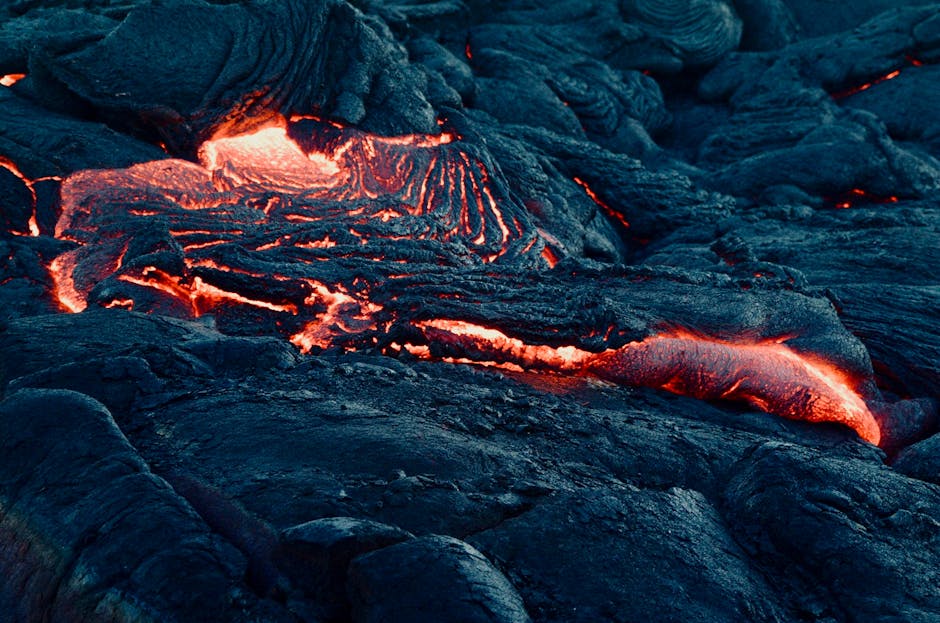
- Effusive eruptions: Liquid magma (e.g., basalt) flows quietly out (like in shield volcanoes).
- Explosive eruptions: Gas-rich, thick magma (e.g., andesite, rhyolite) causes powerful explosions (like in stratovolcanoes).
-
During an eruption, not only lava but also ash, gases, and pyroclastic flows are produced, which pose great dangers to people and nature.
-
⚙ eruption
🌍 Where are active volcanoes?
-
Worldwide, there are about 1500 active volcanoes on land. They are mainly concentrated in the Pacific Ring of Fire, an area around the Pacific, but also along the Mid-Atlantic Ridge and in the Mediterranean. Some well-known active volcanic areas:
-
- Indonesia (e.g., Krakatau, Merapi)
- Iceland (e.g., Eyjafjallajökull)
- Italy (e.g., Etna, Vesuvius, Stromboli)
- Japan (e.g., Fuji)
- Hawaii (Kilauea, Mauna Loa)
-
Some volcanoes sleep for centuries before erupting again.
-
⚙ active
🏞️ Typical types of volcanoes
-
Depending on their structure and eruption style, two main types are distinguished:
-
Volcano Type Description Example Stratovolcano Alternating layers of lava and ash, often explosive eruptions Vesuvius, Fuji Shield volcano Broad, flat structure from runny lava flows Mauna Loa (Hawaii) -
Stratovolcanoes are usually steep and highly dangerous. Shield volcanoes have gentle slopes and their lava travels long distances. There are also mixed types and special volcanoes like cinder and ash cones.
-
⚙ volcano_types
💥 Famous eruptions in history
-
Some volcanic eruptions are famous for their destruction or their impact on global climate:
-
- AD 79 – Vesuvius: The cities of Pompeii and Herculaneum were buried under ash and pumice in hours.
-
- 1815 – Tambora: Largest historical eruption, felt worldwide. Resulted in the 'Year Without a Summer.'
-
- 1883 – Krakatau: Explosion heard as far as Australia, massive tsunami, global cooling.
- 1980 – Mount St. Helens: Huge explosion, massive ash cloud, destruction of the surroundings.
-
These examples show how enormous volcanic eruptions can be locally and globally.
-
⚙ history
🛡️ Safety measures during volcanic eruptions
-
To protect lives, special measures are essential in volcanic regions:
-
- Early warning systems with seismic surveillance and gas monitoring
- Evacuation plans and regular drills for residents
- Construction of safety zones and restricted areas around active volcanoes
- Information campaigns about behavior during ashfall (e.g., wear masks, seal windows)
- Protective structures like lava barriers or channeling lava flows
-
International cooperation, research, and education are crucial to reduce the risk of volcanic eruptions for people and nature.
-
⚙ safety